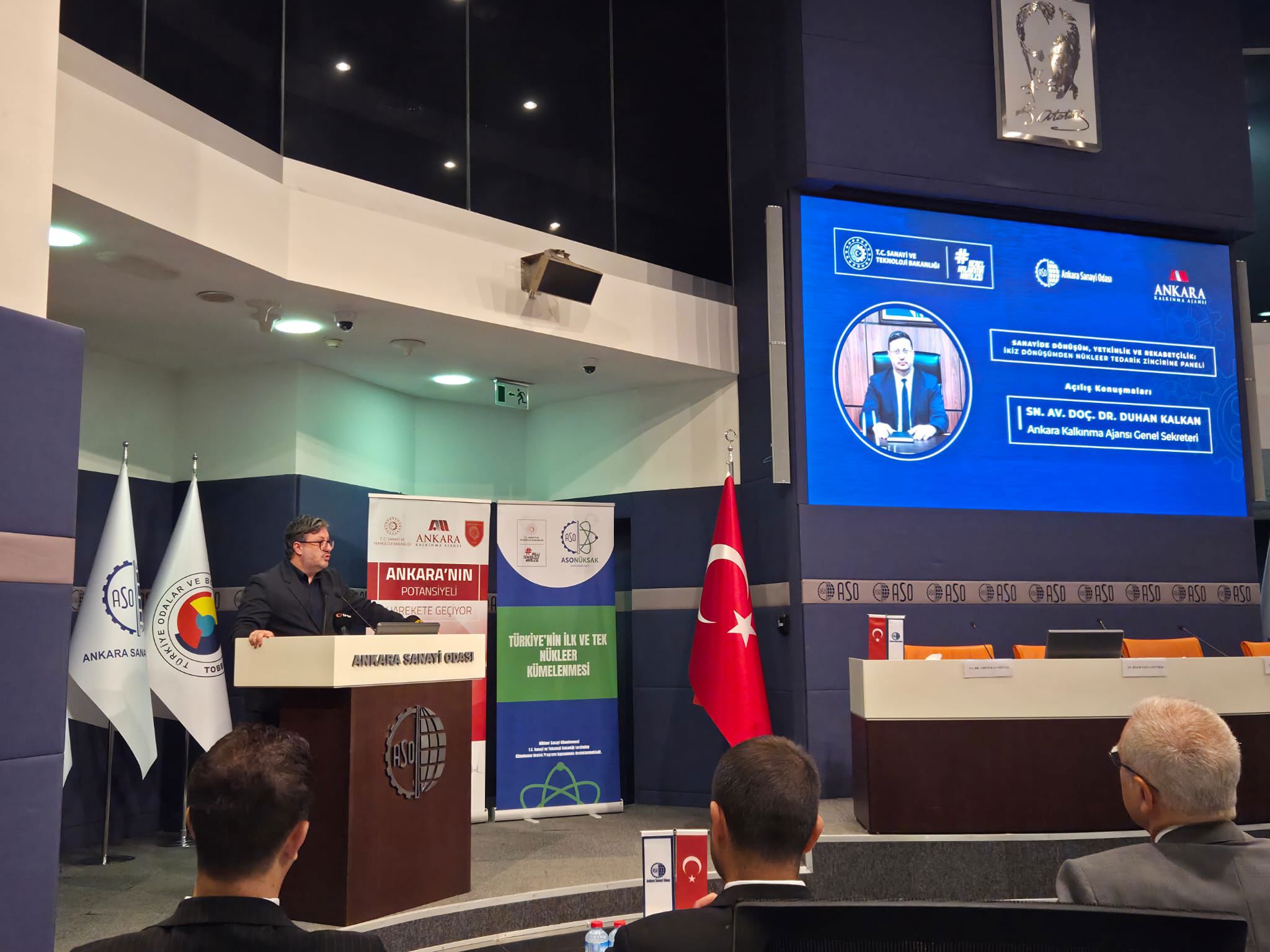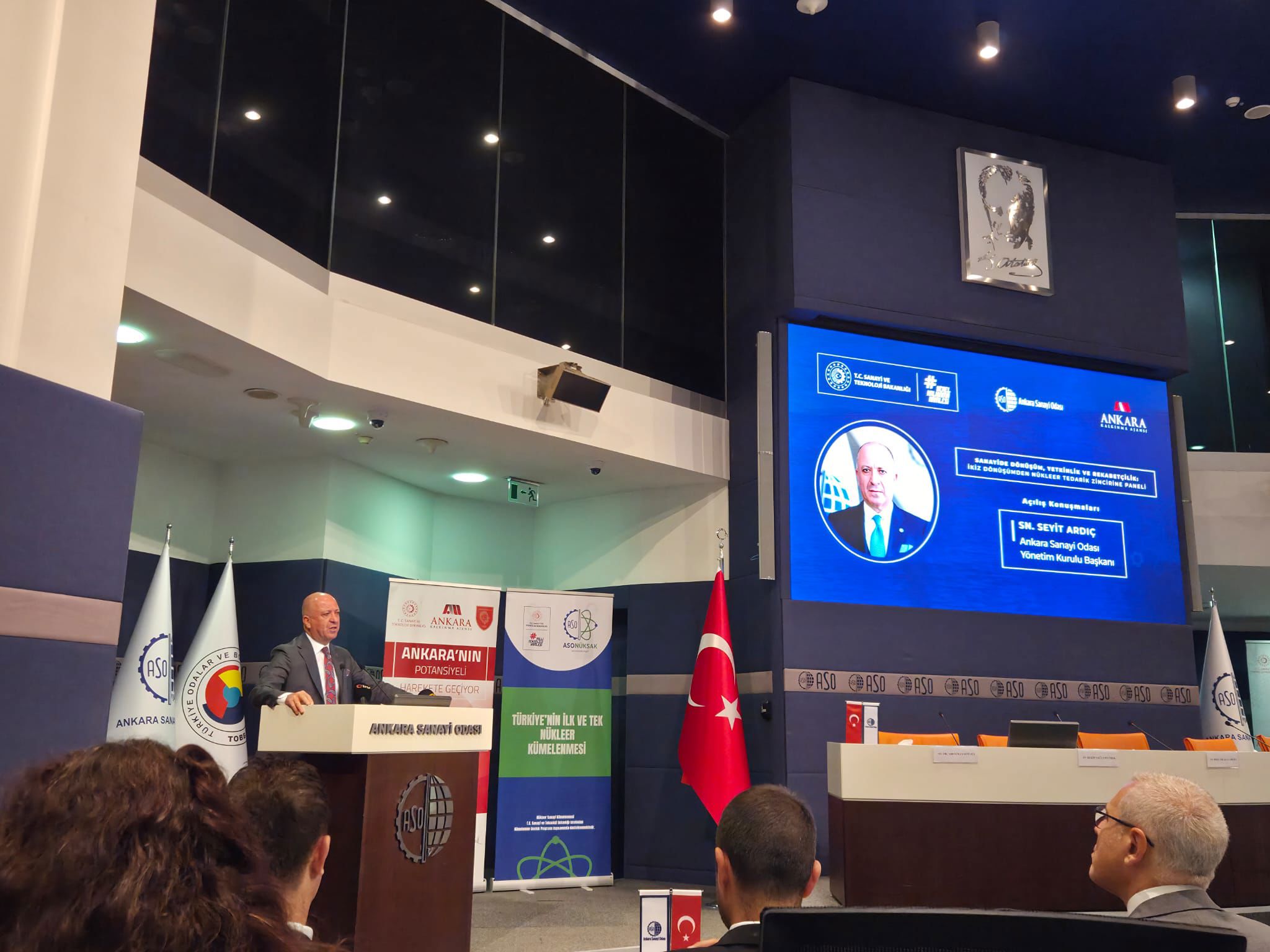
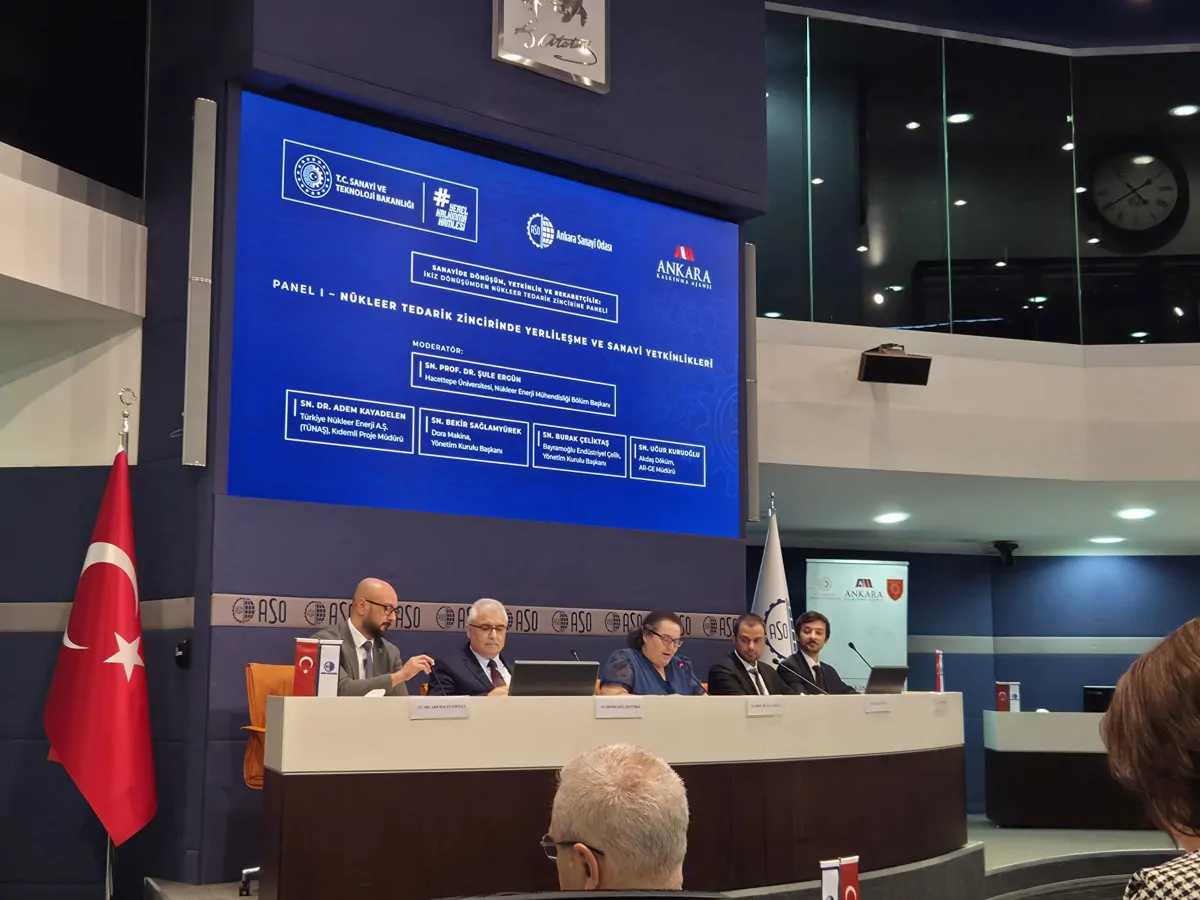
OSTİM Renewable Energy and Environmental Technologies Cluster (OSTİM ENERJİK) participated in the “Transformation, Competence and Competitiveness in Industry: From Twin Transformations to Nuclear Supply Chain” panel organized by the Ankara Chamber of Industry.
The program, which brought together representatives from the public sector, academia, and industry, addressed localization and industrial capabilities in the nuclear supply chain, the impact of SKDM (Substantial Strategic Manufacturing) on exports and Ankara, and the twin transformation of industry through the use of domestic technology. Within the scope of the program, the experiences and best practice examples of companies that completed the first phase of NÜKSAK (Nuclear Supply Chain Management), as well as the experiences gained from twin transformation studies conducted under the technical support of the Ankara Development Agency, were shared.
The event highlighted several key topics, including stronger participation of the domestic industry in the nuclear energy supply chain, the development of companies' technical and institutional capabilities, and the increase in high value-added production capacity. In addition, the green and digital transformation processes of the industry and the increasingly important SKDM (Special Consumption Tax on Production) agenda for exports were also discussed from various perspectives.
The topics discussed at the event, such as localization in the nuclear supply chain, development of industrial capabilities, and domestic production in new energy technologies, also coincide with the issues raised by OSTİM ENERJİK in its previously held Small Modular Reactors (SMR) Workshop.
OSTİM ENERJİK prioritizes the development of domestic industry's production capabilities in future energy technologies, particularly SMRs, the integration of companies into new and high value-added supply chains, and the evaluation of potential collaboration and market opportunities in these areas.
In this context, OSTİM ENERJİK continues to monitor sectoral developments, collaboration opportunities, and access to new value chains that can increase the technological competence and competitiveness of the energy and environmental technologies ecosystem.